This entry was posted on Dec 17, 2025 by Charlotte Bell.
Some time again I wrote a put up on 4 Methods to Hone Your Balancing Abilities. Within the put up, I describe alternative ways our our bodies and minds assist us to remain balanced. Yoga is uniquely suited to at least one facet of balancing specifically: stimulating the vestibular system.
What Is the Vestibular System?
The vestibular system is integral to preserving us upright, not solely in yoga observe, but in addition in merely standing and strolling in our on a regular basis lives. In response to the Cleveland Clinic, right here’s what our vestibular techniques do for us:
“Your vestibular system is a key a part of a fancy sensory system that retains you in stability. Strolling, operating and even remaining upright with out falling are all actions you are able to do because of your vestibular system.
“Vestibular organs inside your interior ear sense your head actions and ship this data to your mind. The actions present details about your place and orientation inside your environment. Your mind integrates this knowledge with sensory data out of your eyes, muscle groups and joints. Your eyes make it easier to orient primarily based on what you see, whereas your muscle groups and joints present sensory data as they make contact together with your environment.
“Based mostly on these three inputs (vestibular system + eyes + muscle groups and joints), your mind sends indicators that inform your physique the best way to stay in stability.”
How Can Yoga Assist?
Yoga is exclusive amongst bodily practices in its potential to stimulate the vestibular system. Every time we alter our head place, we create vestibular enter. In most types of bodily observe—operating, strolling, bicycling, Zumba courses—our head stays upright. In a typical yoga observe, we alter our head place many instances, in a wide range of methods.
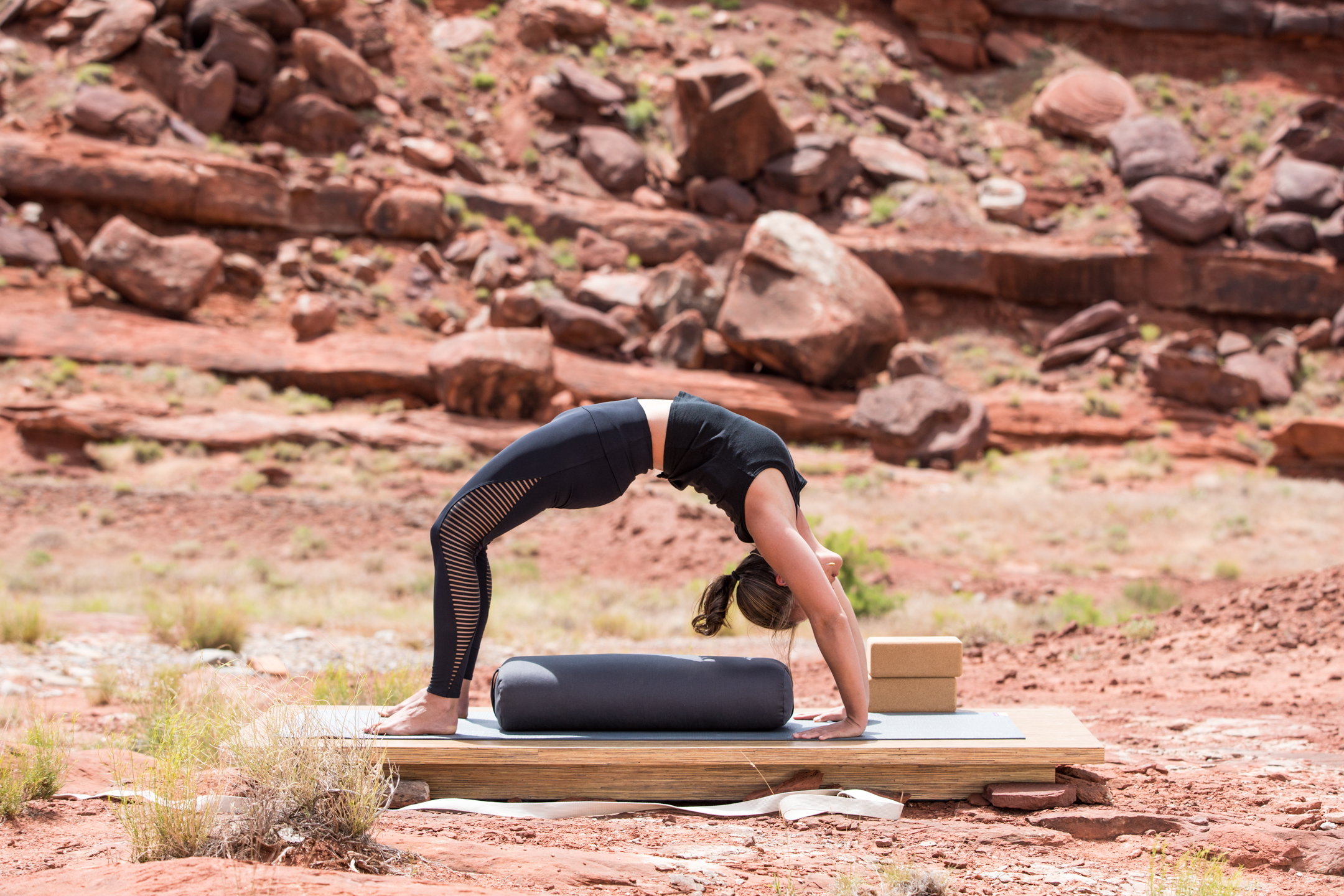
Primary poses equivalent to Adho Mukha Svanasana (Downward Going through Canine Pose), wide-legged standing poses equivalent to Trikonasana (Triangle Pose), standing and seated ahead bends, backbends equivalent to Urdhva Dhanurasana (Upward Bow Pose) and naturally, all of the inversions require that our heads be in positions aside from upright.
- Enhance vestibular enter. Apply yoga poses that place your head in numerous positions. Listed here are a couple of examples:
- Head down: Downward Going through Canine Pose, Uttanasana (Standing Ahead Bend), Prasarita Padottanasana (Large-Legged Standing Ahead Bend)
- Head sideways: Trikonasana (Triangle Pose), Parsvakonasana (Aspect-Angle Pose), Ardha Chandrasana (Half Moon Pose)
- Going through the bottom: Parsvottanasana (Pyramid Pose), Virabhadrasana III (Warrior III) and all seated ahead bends
- Head again: Ustrasana (Camel Pose), Urdhva Hastasana (Upward Arms Pose)
- The other way up: Sirsasana (Headstand), Sarvangasana (Shoulderstand), Pinca Mayurasana (Elbow Steadiness), Adho Mukha Vrksasana (Handstand), Upward Bow Pose
About Charlotte Bell
Charlotte Bell found yoga in 1982 and started educating in 1986. Charlotte is the writer of Aware Yoga, Aware Life: A Information for On a regular basis Apply and Yoga for Meditators, each revealed by Rodmell Press. Her third guide is titled Hip-Wholesome Asana: The Yoga Practitioner’s Information to Defending the Hips and Avoiding SI Joint Ache (Shambhala Publications). She writes a month-to-month column for CATALYST Journal and serves as editor for Yoga U On-line. Charlotte is a founding board member for GreenTREE Yoga, a non-profit that brings yoga to underserved populations. A lifelong musician, Charlotte performs oboe and English horn within the Salt Lake Symphony and folks sextet Pink Rock Rondo, whose DVD received two Emmy awards.